Newly Renamed School of Health and Human Sciences Looks to its Future
What was the School of Human Ecology has a new name and new leadership.
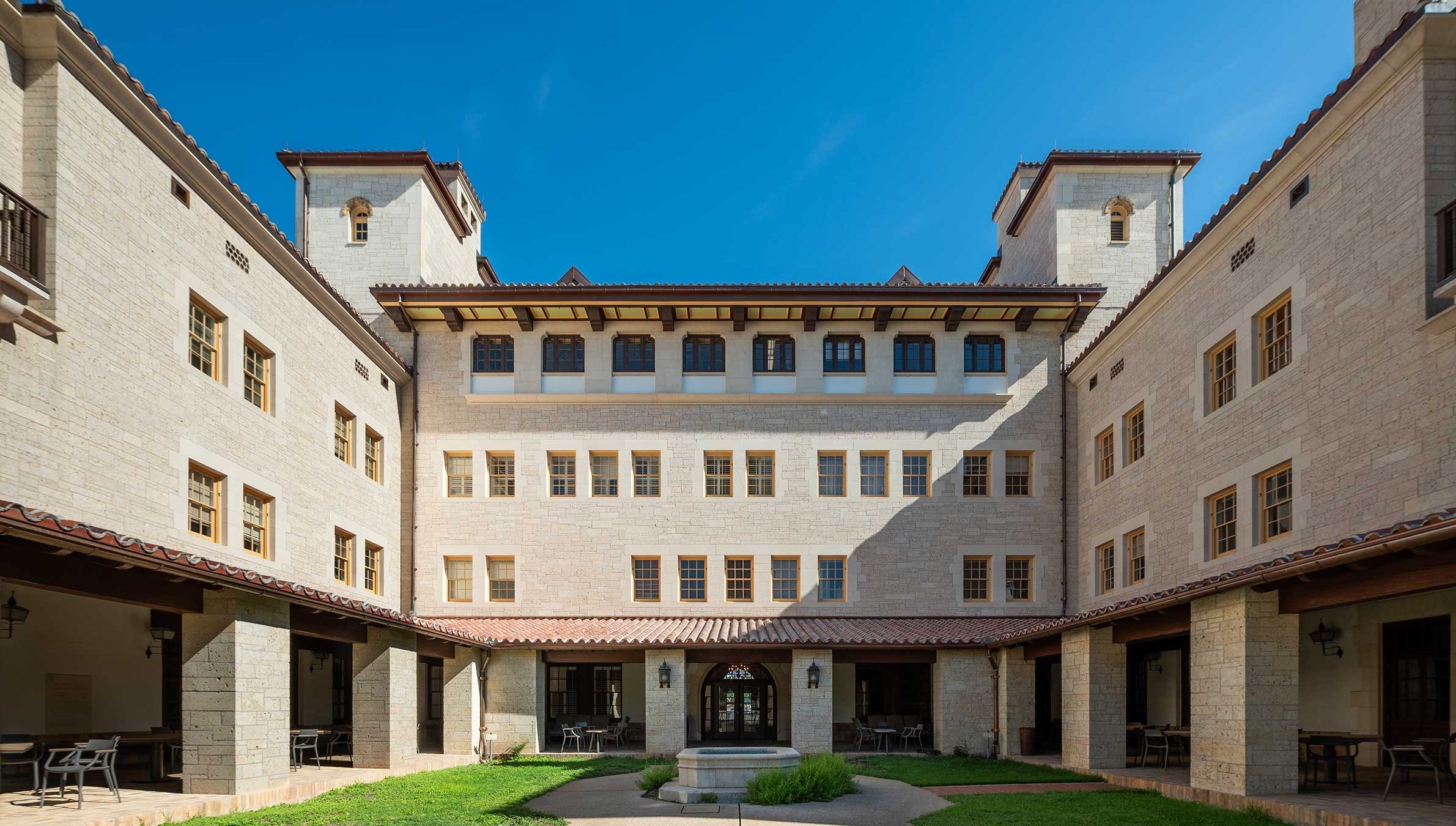
Gearing Hall on The University of Texas at Austin campus is a hub for the newly renamed School of Health and Human Sciences.
This fall, the College of Natural Sciences is both opening its new School of Computing and renaming a school with more than 100-year-old roots that has long been a foundational source for health and human sciences at The University of Texas at Austin.
“The School of Human Ecology is becoming the School of Health and Human Sciences to better reflect the nature of what students in the school learn and where researchers focus their insights,” said Jaimie Davis, who this week was named the school’s director. The holder of the Amy Johnson McLaughlin Administrative Chair and previously interim director for the school, Davis is the Julian C. Barton Professor in UT’s Department of Nutritional Sciences. “The school and its academic disciplines focus on improving the human condition through understanding factors that underlie human health and flourishing.”
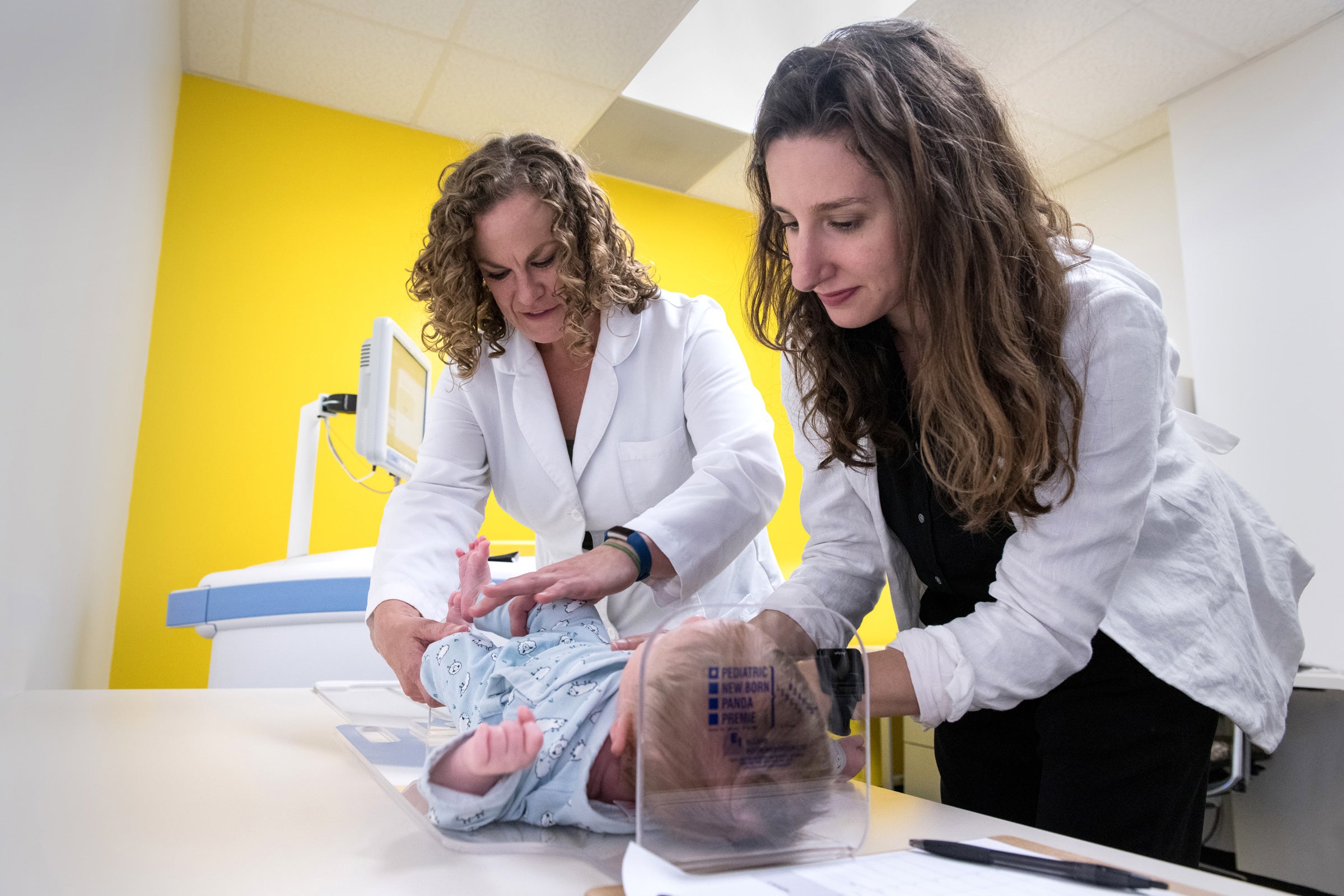
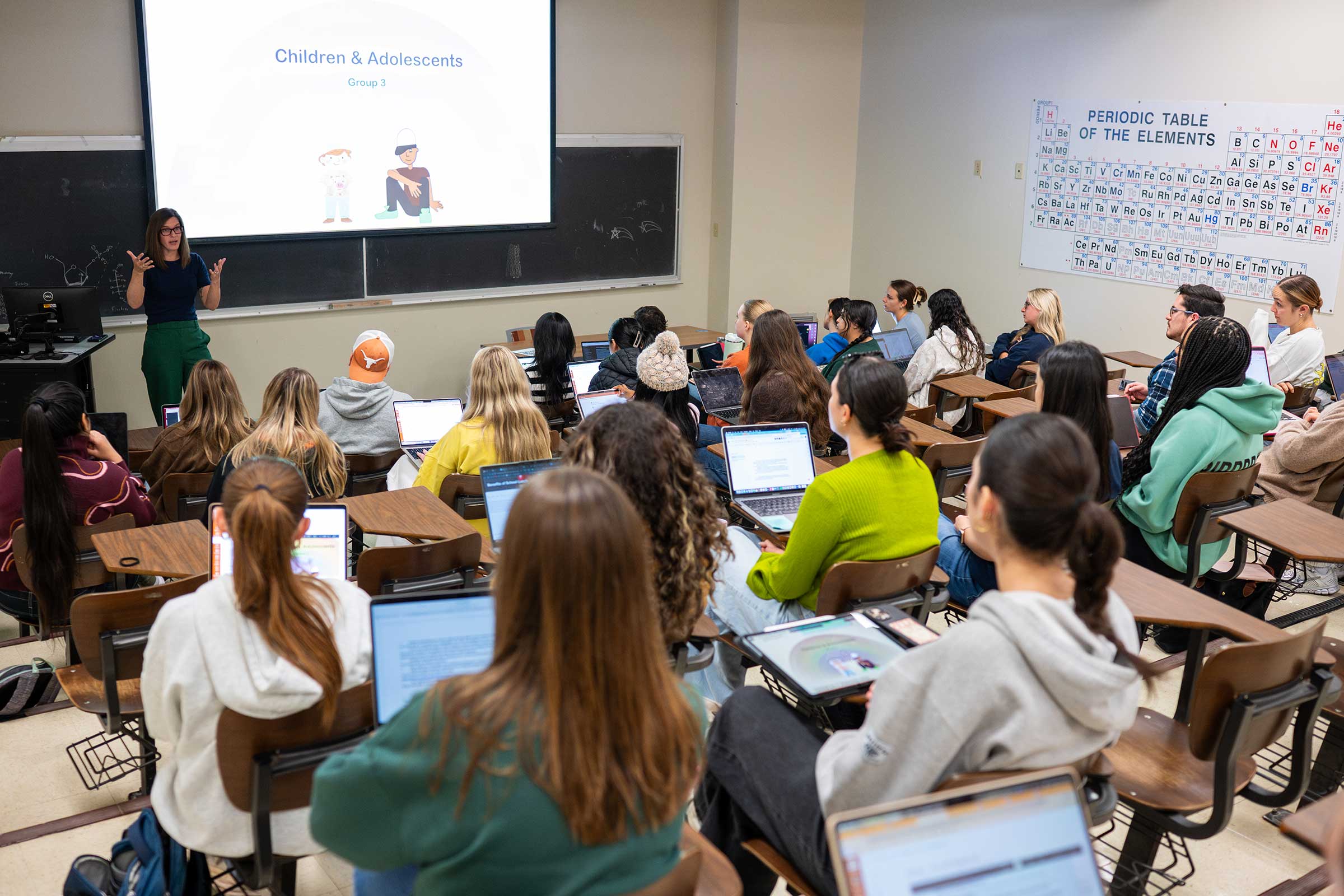
A number of different disciplines that have a long history at UT first organized into a school within the College of Natural Sciences in 2008. The School of Health and Human Sciences offers a wide range of science-based, interdisciplinary programming, experiences and degrees and research that focuses on core aspects of health and well-being for individuals and communities. Students study subjects ranging from public health and nutrition and from human development and family sciences to textiles and apparel. Undergraduate and graduate-degree holders enter thriving careers in health, medicine, public service, academia and industry. The school is also a foundation for what is believed to be the most established experiential learning program at the University in the Priscilla Pond Flawn Child and Family Laboratory, which is approaching its centennial year.
Researchers in the school leverage the tools of molecular biology, cognitive science, epidemiology, large datasets and clinical and community-based research, to name a few. A variety of activities based in the school have an impact on the health and lives of people everywhere. Examples include:
- exploring contributors to aging and dementia and to the spread of infectious diseases;
- developing new sustainable fashion materials;
- working with massive biobanks to improve understanding around population-level health concerns; and
- introducing digital platforms to help clinicians work more effectively with patients.
“The activities that unite our School of Health and Human Sciences community have an impact on the health and lives of people every day,” said David Vanden Bout, dean of the College of Natural Sciences. “The School of Health and Human Sciences also has close partnerships with others across the College of Natural Sciences, as well as at the Dell Medical School and across campus. Our ecosystem is stronger for these ties.”
Researchers and students in the school work frequently with colleagues in the departments of Pediatrics and Population Health at the Dell Medical School, the College of Education’s Department of Kinesiology and Health Education and the Population Research Center, based in the College of Liberal Arts.
“These connections strengthen the school’s boundary-breaking research, create rich interdisciplinary educational and experiential learning opportunities available to students, and generate meaningful improvements in the health and wellbeing of patients and communities,” Davis said. “We look forward to continuing our long history of collaboration.”